
Porcelain vs Ceramic Tiles: The Complete Technical & Architectural Guide
Understanding water absorption, breaking strength, and durability for floor & wall projects
What is the difference between porcelain and ceramic tile?
Porcelain is a type of ceramic tile distinguished by its low water absorption. The Tile Council of North America describes porcelain tile as having water absorption of 0.5% or less. This classification is not a claim that every porcelain tile has the same strength, slip resistance or suitability.
Compare the properties that matter
For either tile type, obtain the relevant test report and intended-use guidance. Compare absorption, abrasion resistance where applicable, breaking strength, surface slip resistance and chemical resistance. A glossy finish describes appearance; it does not establish wet-floor safety.
How do porcelain and vitrified terminology relate?
Vitrified describes a manufacturing outcome involving a dense ceramic body. Trade names such as vitrified, glazed vitrified and porcelain should be checked against the product classification and test evidence supplied by the manufacturer. Do not treat these labels as substitutes for a specification.
How should buyers select a tile?
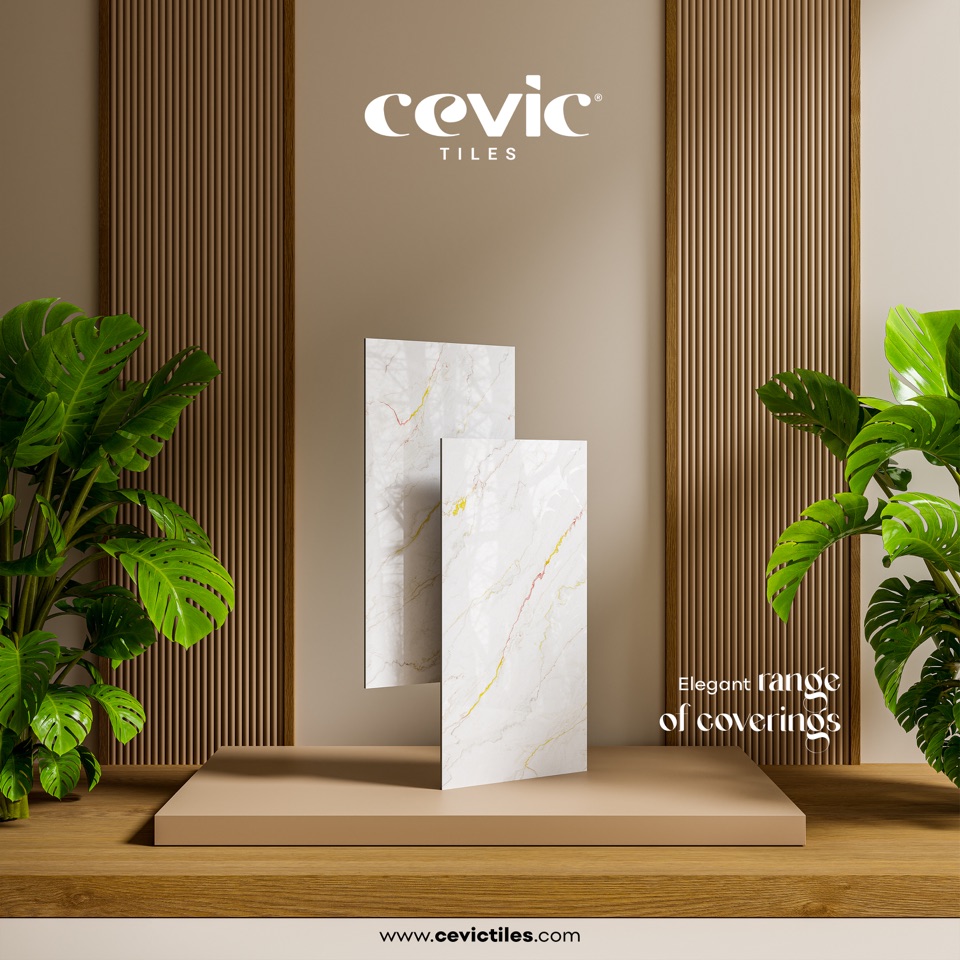
Start with the intended wall or floor application and site conditions. Review a sample for colour, texture and shade variation, then confirm size, thickness, edge treatment, installation method and applicable performance tests. Cevic product pages show catalogue sizes and finishes; request product-specific test evidence for specification.